Why Choose a Power Electric Generator for Global Sourcing?
Choosing a Power Electric Generator for global sourcing is not simply a price comparison. It is a decision about dependable power, supplier capability, and long-term operating risk. Buyers may need backup electricity for warehouses, construction sites, farms, hospitals, or remote production lines. Each setting demands different output, fuel options, enclosure designs, and control systems. A unit that performs well in a factory may struggle in dust, heat, humidity, or unstable transport conditions. Real-world suitability matters.
Experienced sourcing teams examine rated and standby power, voltage, frequency, phase, fuel consumption, noise levels, and service access. They request test records, clear specifications, warranty terms, and evidence of quality control. Factory audits can reveal practical details, such as wiring discipline, spare-parts storage, and final-load testing. Independent inspection before shipment adds another useful checkpoint. It cannot remove every risk. It can expose avoidable problems early. Compliance also requires careful review of destination-country requirements, labeling, emissions rules, electrical safety, and import documentation.
Reliable suppliers communicate limitations instead of promising perfect performance. That honesty is valuable. They should explain maintenance intervals, battery replacement, cold-start behavior, and expected performance under partial loads. A strong sourcing plan also compares lifecycle cost, not only the purchase price. Fuel use, downtime, technician response, shipping damage, and replacement parts can reshape the budget. Some supplier claims still deserve challenge. Ask for measurable evidence and recent references. With technical verification, transparent communication, and realistic planning, global buyers can select equipment that supports safer, steadier operations.
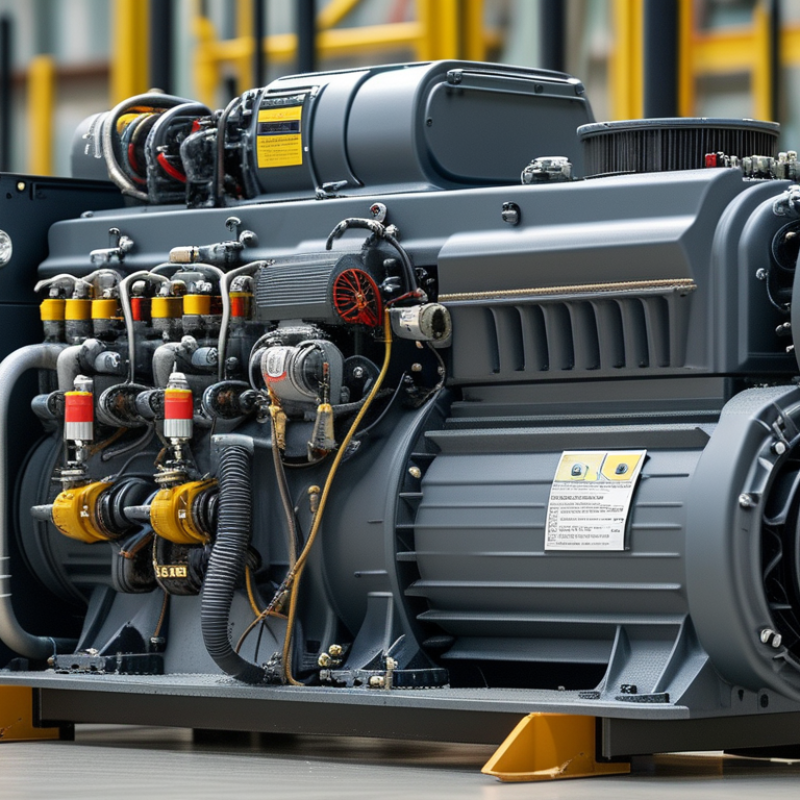
Classify Generator Types by 1 kVA–3,000 kVA Output and ISO 8528 Ratings
Choosing a power electric generator for global sourcing requires more than comparing price and engine size. Output classification gives buyers a practical starting point, from compact 1–20 kVA units to large 500–3,000 kVA systems. Small generators suit offices, clinics, shops, and remote equipment. Mid-range sets, around 20–500 kVA, can support workshops, construction sites, and commercial buildings. Above 500 kVA, projects often need synchronized units, careful fuel planning, and stronger distribution equipment.
ISO 8528 ratings clarify how a generator should operate. Emergency Standby Power (ESP) supports temporary outages with variable loads. Prime Power (PRP) suits locations without reliable grid service and allows changing loads over extended operation. Limited-Time Power (LTP) covers controlled, short-duration use. Continuous Power (COP) supports steady loads for long running periods. These ratings are not interchangeable. A 1,000 kVA standby generator may not deliver the same dependable service as a 1,000 kVA prime-rated unit.
Site experience often reveals overlooked details. Engineers should record motor-starting currents, daily load profiles, altitude, ambient temperature, and required fuel autonomy. A cold warehouse may need different support than a hot coastal plant. Cable distance matters too. A kVA label alone can mislead. That shortcut needs reconsideration. Buyers should request certified test data, maintenance records, acoustic information, and clear derating tables. Some specifications appear precise, yet real demand changes every season. Allowing a modest capacity margin is sensible, although excessive oversizing can reduce efficiency and increase operating costs.
Why Choose a Power Electric Generator for Global Sourcing? - Classify Generator Types by 1 kVA–3,000 kVA Output and ISO 8528 Ratings
A practical sourcing reference for comparing generator output classes, operating profiles, and ISO 8528 performance ratings.
Generator Output Classification and ISO 8528 Rating Guide
Output Class
(kVA) |
Approximate Active Power at 0.8 Power Factor
(kW) |
Typical Generator Type |
Common Global Applications |
Common ISO 8528 Rating |
Operating Profile |
Key Sourcing Checks |
| 1–10 |
0.8–8 |
Portable or compact standby generator |
Small offices, retail points, residential backup, telecom equipment, tools and light construction loads |
ESP; sometimes PRP for mobile or remote use |
Short-duration standby or low-load prime operation |
Single/three-phase configuration, noise level, portability, fuel tank size, local plug and protection requirements |
| 10–50 |
8–40 |
Enclosed diesel or gas generator set |
Small commercial buildings, workshops, farms, security systems and temporary sites |
ESP or PRP |
Emergency backup or variable-load prime power |
Automatic transfer switch compatibility, starting performance, fuel autonomy, enclosure rating and service access |
| 50–150 |
40–120 |
Industrial standby or prime generator set |
Factories, supermarkets, schools, farms, healthcare facilities and construction sites |
ESP, PRP or LTP according to duty cycle |
Frequent backup operation or regular variable-load service |
Motor starting kVA, voltage regulation, load-step response, emissions compliance and spare-parts availability |
| 150–500 |
120–400 |
Heavy-duty diesel generator set |
Medium factories, data rooms, hotels, commercial complexes, utilities and remote microgrids |
PRP or ESP; COP for constant-load projects |
Continuous or prime operation with substantial connected loads |
Parallel operation, harmonic performance, cooling-system design, fuel consumption at defined loads and maintenance intervals |
| 500–1,000 |
400–800 |
Large industrial generator or synchronized generator system |
Large industrial plants, hospitals, airports, data centers and utility-support installations |
PRP, COP or ESP depending on the project duty |
High-capacity standby, continuous base-load or multi-set prime power |
Load sharing, synchronization controls, transformer compatibility, ventilation, fuel logistics and installation standards |
| 1,000–2,000 |
800–1,600 |
High-capacity industrial generator or modular power plant |
Large manufacturing sites, mining operations, infrastructure projects, data centers and islanded grids |
PRP or COP; ESP for emergency-only service |
Continuous prime or base-load operation, often using multiple synchronized sets |
Grid-parallel requirements, protection coordination, black-start needs, fuel-storage regulations, acoustic limits and commissioning support |
| 2,000–3,000 |
1,600–2,400 |
Very large generator set or multi-set power station |
Utility-scale temporary power, major mines, heavy industry, large infrastructure and isolated power networks |
COP or PRP; ESP only where the duty is strictly emergency standby |
Continuous base-load or prime-power operation with engineered redundancy |
Site studies, medium-voltage connection, synchronization, redundancy strategy, transport dimensions, lifting plans and local grid-code compliance |
ISO 8528 Rating Definitions
ESP — Emergency Standby Power: Used for backup during utility failure. It is not intended for normal utility-parallel operation or continuous commercial power supply.
PRP — Prime Power: Used for variable-load applications where the generator is the primary source of power. The permissible load profile and overload capability must follow the declared manufacturer rating.
COP — Continuous Operating Power: Used for constant-load operation at a steady declared output, typically where the generator supplies a continuous load.
LTP — Limited-Time Running Power: Used for a limited number of operating hours at a constant load, subject to the applicable ISO 8528 conditions.
Important Sourcing Notes
Generator kVA is apparent power. The approximate kW figures above use a 0.8 power factor; the actual kW capacity depends on the alternator rating and declared power factor.
A generator’s physical output class does not automatically determine its ISO 8528 rating. The rating must be confirmed on the official datasheet for the exact engine–alternator configuration.
Voltage, frequency, phase configuration, ambient temperature, altitude, emissions rules and local electrical codes can change the suitable generator specification for a global project.
Match 50/60 Hz, 120/230/400 V, and Single- or Three-Phase Markets
Global sourcing becomes easier when a power electric generator matches local electrical standards.
Frequency is a critical starting point: many markets operate at 50 Hz, while others require 60 Hz.
A mismatch can overheat motors, reduce output, or cause unstable control systems.
The International Energy Agency’s Electricity 2024 report expects global electricity demand to rise by about 4% annually through 2026.
Reliable, adaptable backup power is therefore becoming more important for factories, warehouses, and infrastructure projects.
Voltage and phase configuration also require careful checking.
A 120 V single-phase generator may suit light commercial equipment, while 230 V systems serve many residential and industrial applications.
Heavy machinery often needs 400 V three-phase power for balanced loads and lower transmission losses.
IEC 60038 identifies 230/400 V as a standardized low-voltage system, but local installation practices still vary.
Never assume that a country’s nominal voltage tells the whole story.
Procurement teams should confirm frequency, voltage, phase, neutral arrangement, plug standards, and load type before ordering.
Small details matter.
Resistive heaters, pumps, and variable-speed drives behave differently.
The IEA also notes that electricity systems face rising flexibility needs as demand expands and renewable generation grows.
A generator with selectable 50/60 Hz output and configurable 120/230/400 V options can reduce sourcing risk.
Yet flexibility is not magic.
Incorrect switching, poor load balancing, or incomplete site data can still create expensive problems.
A field verification sheet remains essential.
Verify Supplier Quality Through IEC Compliance and 100% Load-Bank Testing
Why Choose a Power Electric Generator for Global Sourcing?
Global electricity demand is rising. The International Energy Agency’s Electricity 2024 report forecasts average annual growth of about 3.3% through 2026. This pressure makes dependable backup power increasingly important for factories, hospitals, and infrastructure projects. Yet a low quoted price can hide weak protection systems, unstable frequency, or poor assembly quality.
IEC compliance gives buyers a clearer technical baseline. Ask suppliers to identify applicable standards, such as IEC 60034 for rotating electrical machines and IEC 60204-1 for electrical equipment safety. For generator sets, ISO 8528 performance requirements also deserve review. A certificate alone is not proof. Verify its scope, issuing body, model coverage, and production date. Small paperwork gaps can become expensive problems.
Request a 100% load-bank test before shipment. The supplier should operate the generator at its rated output, record voltage, frequency, temperature, oil pressure, fuel use, and alarm responses. Test records should include serial numbers, instruments, calibration dates, and time-stamped results. This reflects real commissioning conditions more closely than a brief no-load start. It is not perfect, though. Load-bank testing may miss vibration, transport damage, or poor site installation. Independent inspection and video evidence add useful confidence. A serious sourcing process connects IEC documentation with measurable factory performance, not promises.
Why Choose a Power Electric Generator for Global Sourcing?
Verify supplier quality through applicable IEC compliance documentation and a 100% load-bank test.
The test profile uses four practical load points—25%, 50%, 75%, and 100% of rated generator output—to progressively verify operating stability. The 100% point confirms that the generator can be tested at its declared rated capacity. Actual acceptance limits, test duration, and applicable IEC requirements should be defined in the purchase specification and verified through supplier records.
Calculate Global Sourcing Costs Across 5,000–20,000 Operating Hours
Why Choose a Power Electric Generator for Global Sourcing?
Global sourcing costs change sharply between 5,000 and 20,000 operating hours. A purchase price alone cannot show the real cost. The U.S. Department of Energy lists diesel energy content at approximately 137,381 Btu per gallon. This supports consistent fuel-cost comparisons across regions.
Consider a 500 kW generator operating at 70% load. Using an estimated fuel rate of 0.27 liters per kilowatt-hour, 5,000 hours require about 472,500 liters. At 1.10 dollars per liter, fuel costs reach approximately 519,750 dollars. At 20,000 hours, the same calculation reaches 2.08 million dollars. The U.S. Energy Information Administration’s fuel-price data shows why local price volatility must be included in sourcing models. Small assumptions matter.
Fuel is not the only variable. Add freight, import duties, commissioning, scheduled maintenance, spare parts, cooling, and battery replacement. ISO 8528 performance classifications also help buyers compare output stability and transient performance between suppliers. Still, a datasheet may hide costs. Fuel consumption often changes under partial load, high altitude, heat, or poor maintenance. That is where many global comparisons become unreliable. I would test three load profiles, not one. The estimate may remain imperfect, but it becomes more useful when every assumption is visible.

 Sinotruk Parts
 Shacman Parts
 FAW Parts
 Dongfeng Parts
 Foton Parts
 CHENGLONG PARTS
 Golden Dragon Bus Parts
 King Long Parts
 Yutong Parts
 Higer Parts
 Zhongtong Parts
 Ankai Parts



 Mr. Perry Wu International Sales Director