How to Choose the Right Standby Power Generator for Your Home?
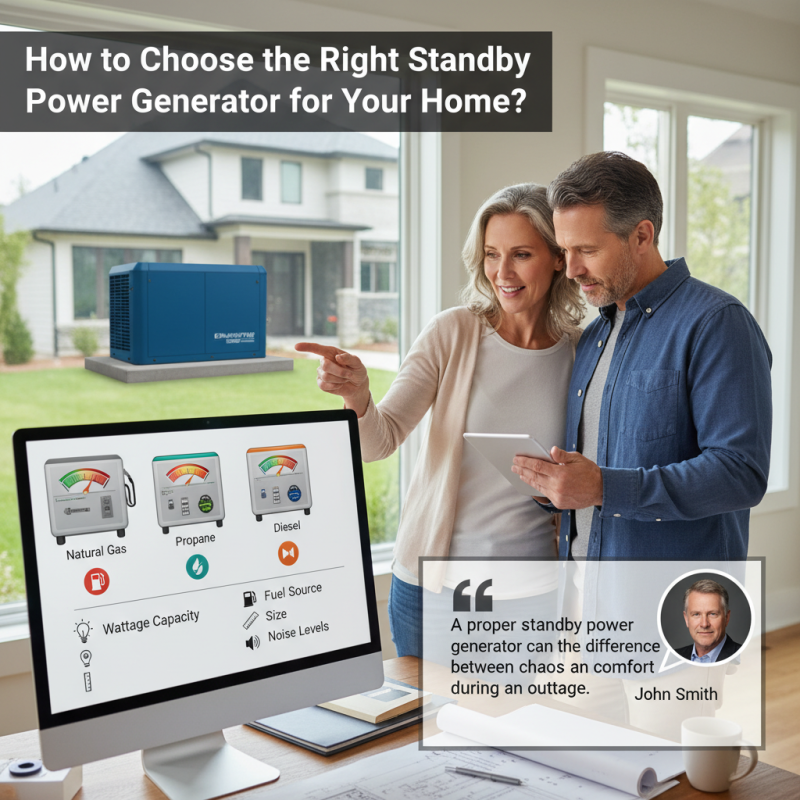
Choosing the right standby power generator is essential for every homeowner. According to a recent report by the Electric Power Research Institute, nearly 35% of households in the U.S. experience power outages each year. This trend highlights the growing importance of standby power generators for reliability during unexpected events. Industry expert John Smith, who has over 20 years of experience in the energy sector, states, “A proper standby power generator can be the difference between chaos and comfort during an outage.”
When selecting a standby power generator, homeowners must consider several critical factors. The generator's wattage capacity is vital, as it directly impacts which appliances can be powered. Furthermore, understanding the fuel source—whether it’s natural gas, propane, or diesel—affects both efficiency and maintenance. Many homeowners overlook the size and noise levels, leading to regrettable purchases later.
As you explore options, reflect on your unique power needs and budget constraints. A generator may seem like a straightforward decision, yet it requires thorough research to ensure it meets your demands. Without careful planning, your standby power generator could fall short when you need it most.
Understanding Standby Power Generators and Their Importance
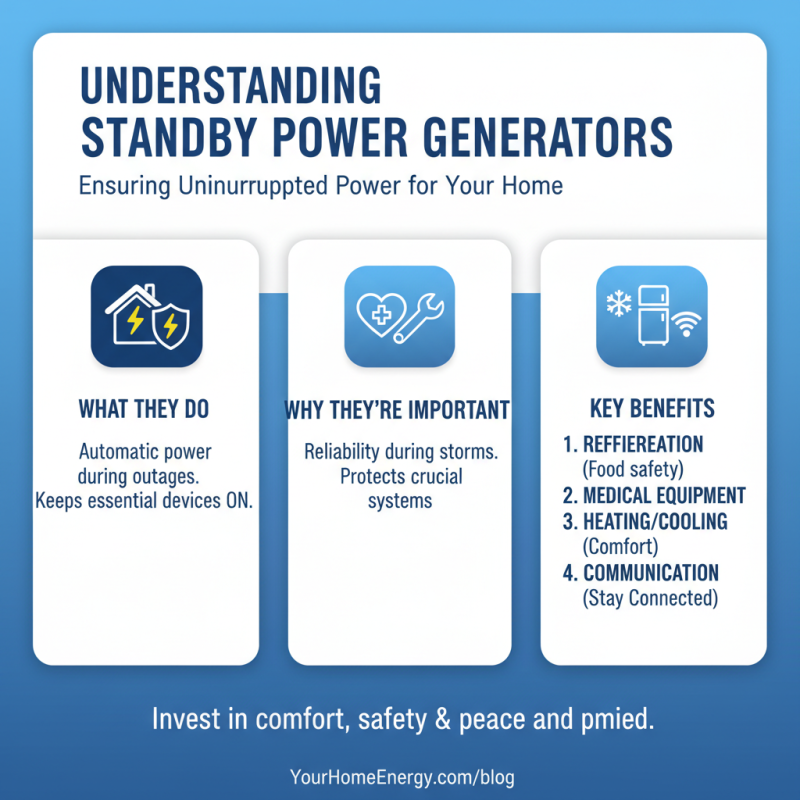
Standby power generators are essential for homes facing frequent power disruptions. During storms or outages, a reliable generator ensures that crucial devices remain operational. This includes refrigerators, medical devices, and heating systems. Understanding their role in maintaining a comfortable lifestyle is key to choosing the right unit.
When selecting a generator, consider power output and fuel source. Some generators run on natural gas, while others utilize propane or diesel. Homeowners should assess their power needs carefully. Calculating the wattage of essential appliances helps avoid under or over-sizing the generator. Many make the mistake of choosing convenience over requirements, which can lead to frustration.
Regular maintenance is often overlooked. Neglecting routine checks can result in malfunction when you need it most. Reflecting on whether a generator is truly necessary is also wise. Not every home needs a full standby system. Some may find portable options sufficient. Therefore, weighing your specific needs against the potential for outages is crucial in making an informed decision.
Assessing Your Home's Power Needs and Usage Patterns
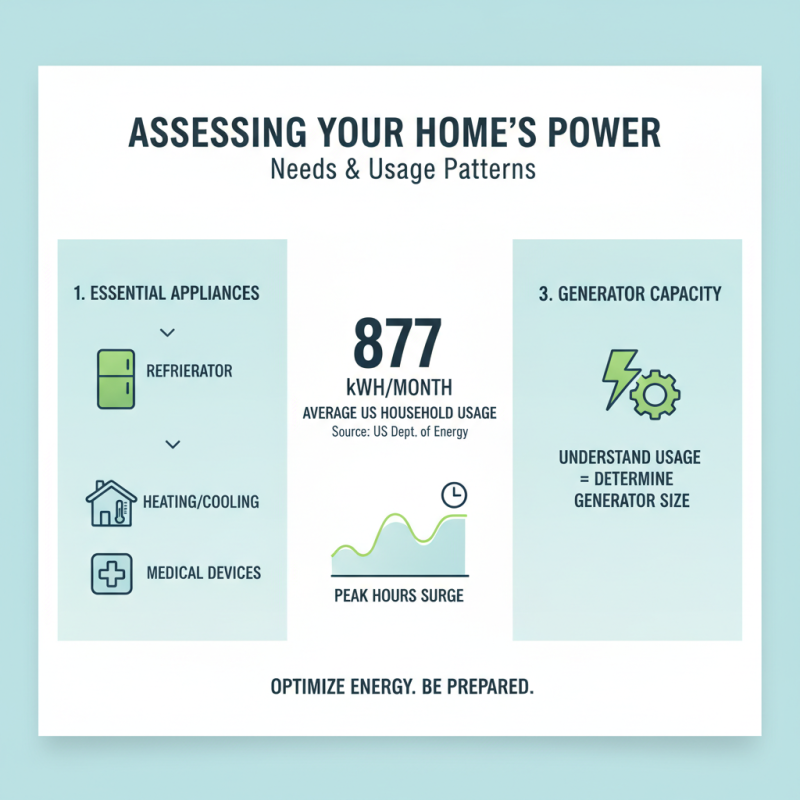
When evaluating your home’s power needs, start by identifying essential appliances. This includes refrigerators, heating systems, and medical devices. According to the U.S. Department of Energy, the average household uses about 877 kWh per month. Many homes experience a spike in power demands during peak hours, which can complicate energy management. Understanding these usage patterns helps in determining the required generator capacity.
Next, consider your peak load. Many homeowners underestimate their simultaneous power needs. The National Fire Protection Association emphasizes the importance of calculating wattage accurately. For instance, a refrigerator might need 700 watts, while an air conditioner could require up to 3,000 watts. If multiple devices run together, the generator must handle this total load. Assess these figures with care to avoid an underpowered system.
Finally, think about the runtime you need. Some generators provide backup power for a few hours, while others can last for days. A survey from the American Society of Civil Engineers reveals that long outages are becoming more common in certain areas. Your generator choice should reflect this reality. Planning for potential extended outages might lead to more suitable selections.
Different Types of Standby Generators Available in the Market
When selecting a standby power generator, it's crucial to understand the types available. Generators primarily fall into three categories: portable, inverter, and whole-house generators.
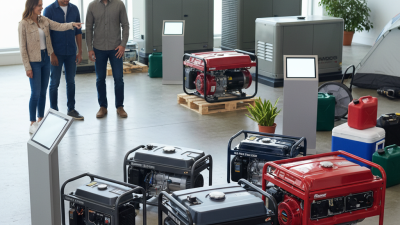
Portable generators are versatile and can power specific appliances during an outage. They are generally less expensive but require manual setup. However, they may not provide enough power for larger households.
Inverter generators are known for their quiet operation and efficiency. They deliver stable power, making them ideal for sensitive electronics. Yet, their capacity often limits them to smaller loads, which might not suit larger homes.
Whole-house generators, on the other hand, automatically provide backup power during blackouts. They integrate with your home's electrical system. While these offer convenience, the installation can be costly, demanding professional expertise.
Consider your specific needs and local climate when choosing. Factors like fuel type and noise levels also matter. Some generators run on gasoline, while others use natural gas or propane. Assess alternative energy sources as well, like solar options.
Always think about future needs, as your power demands can change over time. Achieving the best fit involves careful consideration of all these facets.
Key Features to Consider When Choosing a Generator
When selecting a standby power generator, understanding its key features is essential.
Power output is crucial. Determine the wattage required to run essential appliances during an outage.
Consider adding a buffer to handle unexpected demands. Another important aspect is the fuel type.
Generators can run on gasoline, propane, or natural gas, each having unique advantages and disadvantages.
Propane, for instance, offers a longer shelf life.
Think about the generator's transfer switch options.
A manual transfer switch requires more effort during power outages but is cost-effective.
An automatic transfer switch offers convenience, switching power immediately without manual intervention.
Also, noise levels can impact your comfort.
Look for models designed to operate quietly, especially if you have close neighbors.
Reflect on the maintenance needs too. Some generators require regular oil changes and filter replacements, which might deter some owners.
Lastly, consider the warranty and support.
A longer warranty often indicates confidence in the generator's reliability.
Research testing and user reviews for real-world experiences.
These insights can guide your decision.
While every generator has its perks and downsides, selecting the right model requires thoughtful consideration of these features.
Installation and Maintenance Considerations for Standby Generators
When considering the installation of a standby power generator, one must focus on crucial factors. Understanding local building codes is essential. These regulations ensure safety and efficiency. Consulting with a licensed electrician can help navigate these standards. They can also assist in assessing the electrical capacity required for your home.
Maintenance is another critical aspect. Regular inspections are required to ensure the generator operates effectively. Each unit has a unique maintenance schedule, often detailed in the user manual. This schedule includes tasks like oil changes and battery checks. If neglected, these elements can lead to failures when you need the generator most.
Placement of the generator matters greatly. It should be installed in a well-ventilated area, away from windows and doors. This prevents harmful fumes from entering your home. Ensure that the transfer switch is correctly installed for safety. Overlooking these details can lead to costly mistakes. Regularly reviewing your choice of generator can also be beneficial, allowing for adjustments based on changing power needs as your household evolves.

 Sinotruk Parts
 Shacman Parts
 FAW Parts
 Dongfeng Parts
 Foton Parts
 CHENGLONG PARTS
 Golden Dragon Bus Parts
 King Long Parts
 Yutong Parts
 Higer Parts
 Zhongtong Parts
 Ankai Parts



 Mr. Perry Wu International Sales Director