How to Choose a Multi Fuel Generator in 2026?
Choosing a Multi Fuel Generator in 2026 requires more than comparing wattage and price. Fuel flexibility can protect your household, workshop, or remote site when gasoline becomes scarce. However, flexibility also introduces extra decisions, including fuel compatibility, storage, maintenance, noise, and emissions.
Generator specialist Paul A. Ciampanelli often emphasizes a practical rule: “A generator must match the load, not the wish list.” That principle deserves attention. A refrigerator may need modest running power but a much larger starting surge. Pumps, compressors, heaters, and welders can behave similarly. Write down each appliance’s running watts and starting demand. Then add a sensible reserve.
Look beyond the control panel. Examine the engine design, transfer-switch compatibility, outlet protection, cold-start performance, and service network. A propane and gasoline model may suit suburban backup use. A tri-fuel generator could offer greater resilience, but its conversion system may require careful adjustment. Diesel models often support heavy-duty work, although they can be louder and more expensive.
Small details matter. Check the fuel valve, oil-drain access, wheel strength, and display readability at night. Read the manufacturer’s manual before buying. Verify local installation and operating requirements with a qualified professional. This is not glamorous.
Real-world reliability depends on testing. Run the unit under load, inspect hoses, and maintain fresh fuel. I would not choose the largest model automatically. Oversizing can increase purchase costs, fuel use, and maintenance demands. The better choice is the Multi Fuel Generator that fits your actual loads, available fuels, environment, and maintenance ability. Be honest about those limits.
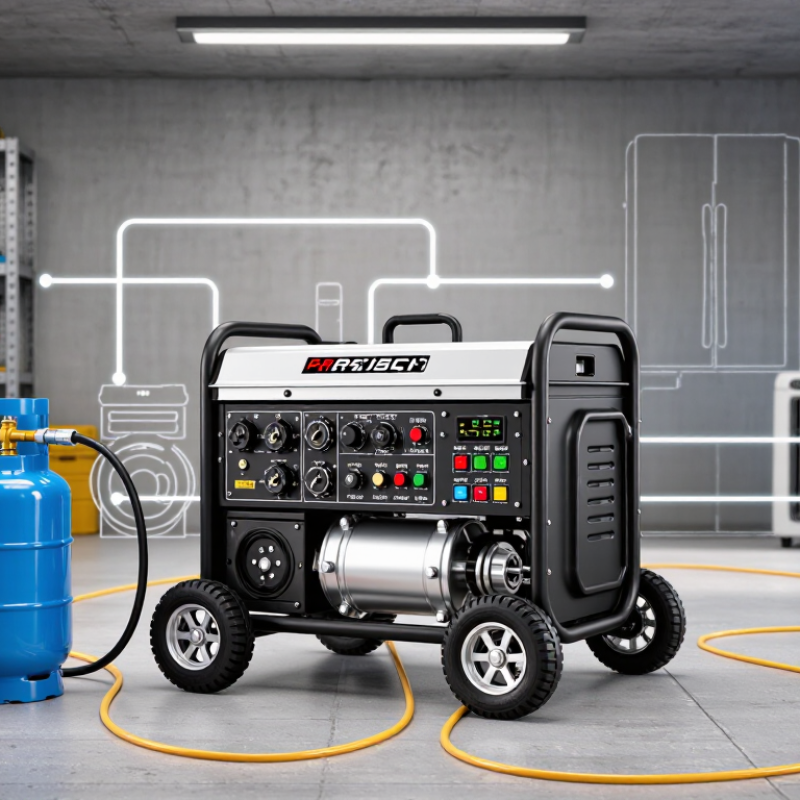
Size the Generator Under NEC’s 125% Continuous-Load Rule
Choosing a multi fuel generator in 2026 starts with a disciplined load calculation. NEC 2023, Article 215.2, requires feeder capacity for 125% of continuous loads, plus 100% of noncontinuous loads. A continuous load operates for three hours or longer.
For example, 2,400 watts of continuous demand needs 3,000 watts of generator capacity before adding other loads. Add a 1,500-watt refrigerator and the minimum calculated load becomes 4,500 watts.
Do not size only from appliance nameplates. Motors draw extra starting current, sometimes several times their running demand. Pumps, compressors, and well systems deserve special attention. A 2024 U.S. Energy Information Administration report shows average household electricity use near 886 kilowatt-hours monthly. That figure describes energy consumption, not emergency demand. Short, heavy loads matter more during an outage. They can overload an undersized generator quickly.
Fuel selection also changes available output. Propane may produce less power than gasoline on some engines, while altitude, temperature, and fuel quality create further derating. Check the generator’s tested running and starting ratings. NFPA 70 Article 445 also addresses generator installation and protection requirements. My first spreadsheet estimate is often too optimistic. I now list every simultaneous load, then verify voltage drop and transfer equipment with a qualified electrician. Leave practical headroom. A 125% calculation is a minimum design rule, not a comfortable operating target.
Compare Gasoline, LPG, and Natural Gas by Btu-per-Gallon Ratings
How to Choose a Multi Fuel Generator in 2026?
Fuel energy content gives a useful starting point, but it does not predict generator output alone. The U.S. Energy Information Administration lists regular gasoline at about 120,214 Btu per gallon. Propane, the main LPG fuel, provides roughly 91,452 Btu per gallon. That is about 24% less energy per gallon, so a propane generator may consume more fuel for similar runtime. Natural gas is measured by volume, not gallons. EIA reports an average of about 1,037 Btu per cubic foot. Using that figure, approximately 116 cubic feet of natural gas equals the energy in one gallon of gasoline.
The comparison is imperfect. Gas quality, air temperature, regulator settings, and engine condition can change real performance. The U.S. Department of Energy’s Alternative Fuels Data Center uses gasoline-gallon-equivalent conversions, showing why natural gas should be compared through energy equivalents rather than tank size. In field use, I would check the generator’s separate wattage ratings for gasoline, LPG, and natural gas. A unit producing 7,000 watts on gasoline may deliver less on gaseous fuels. That difference is easy to overlook.
Tips: Record the fuel rating, not only the tank capacity. Use the manufacturer’s consumption chart at your expected load. Keep a small margin for startup surges. Also, verify local fuel availability. Natural gas can be convenient, but a service interruption makes that convenience less certain.
Verify EPA Tier 4 Final, CARB, and 2026 Emissions Requirements
Choosing a multi-fuel generator in 2026 requires more than checking fuel flexibility. Confirm the engine’s exact power category and certification documents. EPA’s Nonroad Compression-Ignition Engine Standards Reference Guide lists Tier 4 Final limits of 0.40 g/kWh for combined NOx and nonmethane hydrocarbons, and 0.02 g/kWh for particulate matter in applicable 56–560 kW ranges. Ask for the EPA certificate, engine family, test cycle, and model year.
CARB compliance needs separate attention. California’s Off-Road Diesel-Fueled Fleets Regulation can add reporting, labeling, fleet, or operating requirements. A generator may carry a Tier 4 Final certificate yet still need California registration or local air-district approval. There is no single 2026 rule covering every generator and location. Check the current EPA eCFR, CARB regulatory database, and the purchasing authority’s permit conditions before delivery. Small details matter.
Fuel switching can also affect emissions performance. Verify whether the engine is certified for diesel, natural gas, propane, or blended operation, rather than trusting a sales label. The U.S. Energy Information Administration’s 2024 Annual Energy Review shows continued fuel-price and supply variability across regions, making dual-fuel capability practical for some sites. However, conversion kits may change certification status. I would not assume “multi-fuel” means compliant. That assumption is easy, expensive, and sometimes wrong.
Check Transfer Performance Against NFPA 110’s 10-Second Target
How to Choose a Multi Fuel Generator in 2026?
Check Transfer Performance Against NFPA 110’s 10-Second Target
A multi-fuel generator is not automatically a dependable emergency system. NFPA 110 sets a 10-second target for Level 1 emergency power systems after normal power fails. That clock includes detection, engine start, voltage stabilization, and transfer. A strong engine alone is not enough. The transfer switch, controls, and site wiring must work together.
Uptime Institute’s 2024 Annual Outage Analysis reported that 54% of respondents said their latest outage cost at least $100,000. That figure makes transfer speed a financial issue, not only a technical detail. During testing, record the time from utility loss to stable load acceptance. Test cold starts, low fuel pressure, dual-fuel changes, and realistic loads. A generator may pass a warm test and fail on a cold morning. I have seen specifications look impressive, yet the transfer sequence remained unclear.
Tips:
Request a witnessed 10-second transfer test. Ask for time-stamped test records, not verbal assurances. Check whether the stated rating covers the full load, including motors and battery chargers. Confirm fuel switching does not interrupt output. Review maintenance access, fuel quality controls, and local authority requirements. NFPA 110 guidance is important, but it does not replace site-specific engineering. A small delay can expose a large weakness.
Evaluate Runtime, Noise, Service Intervals, and Warranty Coverage
How to Choose a Multi Fuel Generator in 2026?
Runtime should be measured at your real working load, not the advertising maximum. A freezer, pump, and several lights may draw more power during startup. Test the generator with similar equipment for at least two hours. Record fuel use, voltage stability, and remaining tank level. Multi-fuel models often run longer on gas, but bottled fuel storage can complicate emergency planning. Keep a small reserve.
Noise deserves a practical check. Stand ten meters away while the generator supplies a steady load. Listen for low-frequency vibration through walls and floors. A quiet reading at idle may change sharply under heavy demand. Ask whether the stated figure uses a specific distance or operating mode. Small differences matter at night. I once underestimated vibration, and the concrete surface amplified it.
Service intervals affect ownership more than many buyers expect. Check oil changes, air-filter access, spark-plug replacement, and fuel-system cleaning. Choose a design that allows inspection without removing half the frame. Record every service date, even for occasional use. Warranty coverage should state the period, authorized service process, transport responsibility, and exclusions for neglected maintenance or unsuitable fuel. Read the actual warranty document, not only the sales description. Coverage may look generous until labor and replacement parts are excluded.
How to Choose a Multi Fuel Generator in 2026?
Compare typical non-brand generator classes by runtime at 50% load, operating noise, recommended service interval, and limited warranty duration.
Larger generators generally provide more output but may produce higher noise levels and consume fuel faster. Runtime depends on tank size, load, fuel type, and operating conditions. Service intervals and warranty coverage vary by product, so always confirm the owner’s manual and local service availability before purchase.

 Sinotruk Parts
 Shacman Parts
 FAW Parts
 Dongfeng Parts
 Foton Parts
 CHENGLONG PARTS
 Golden Dragon Bus Parts
 King Long Parts
 Yutong Parts
 Higer Parts
 Zhongtong Parts
 Ankai Parts



 Mr. Perry Wu International Sales Director