Top DG Generator Manufacturers for Global Buyers?
Choosing a reliable Dg Generator supplier is not simply a matter of comparing prices. Global buyers must examine performance, fuel efficiency, factory capability, certification, and long-term service support. A low quotation may hide weak components, limited spare parts, or delayed technical assistance. That risk becomes visible when a generator must support a hospital, construction site, data center, or remote factory.
As Cummins power-generation expert Matt Stevenson advises, “The right power system begins with understanding the customer’s application.” This principle should guide every supplier comparison. Buyers need clear information about prime and standby ratings, engine origin, alternator quality, control-panel functions, noise levels, and load response. Site conditions matter too. A dusty mine, humid coastal warehouse, and cold northern installation require different protection and maintenance plans.
Look beyond the showroom.
Leading Dg Generator manufacturers usually provide documented testing, trained engineers, responsive warranty teams, and regional parts networks. They can explain why a 500 kVA set suits one project but fails another. They also discuss fuel consumption under realistic loads, not only laboratory figures. Still, no manufacturer is perfect. Marketing materials can be incomplete, and buyer assumptions can be wrong. Independent inspection and reference checks remain valuable.
This guide compares major manufacturers for global buyers. It considers technical reliability, customization, delivery experience, service coverage, and communication quality. The strongest choice may not be the cheapest or most famous. It is the supplier that can keep your equipment running when conditions become difficult.
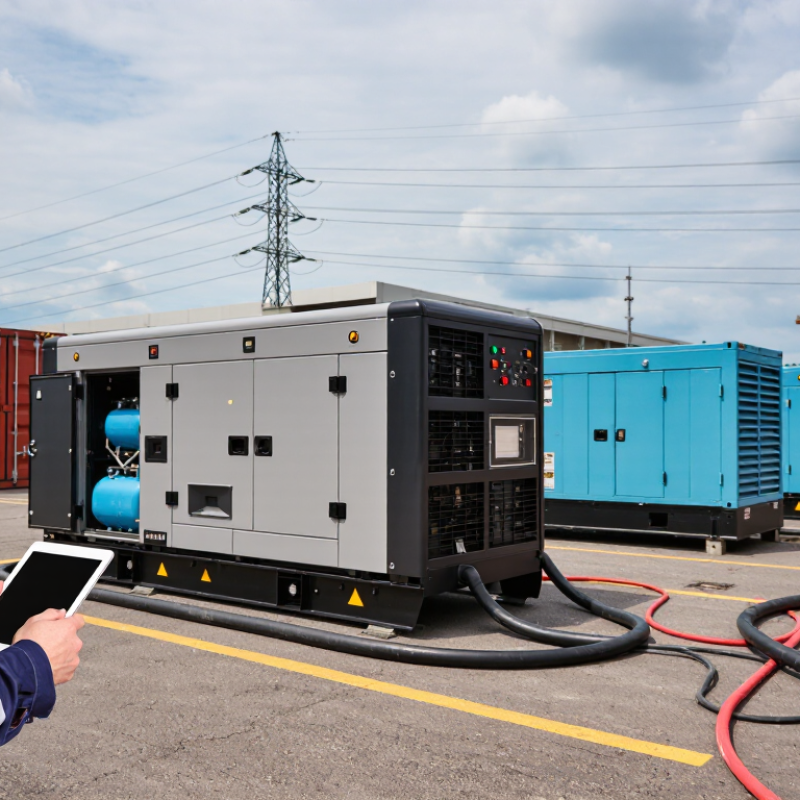
What DG Generators Are and Why Global Buyers Use Them
Top DG Generator Manufacturers for Global Buyers
What DG Generators Are and Why Global Buyers Use Them
DG generators are diesel-powered machines that produce electricity when the main grid fails or remains unavailable. A diesel engine drives an alternator, converting fuel energy into usable electrical power. This system can support factories, hospitals, construction sites, farms, and remote offices. It is a practical backup, not a magic solution.
Global buyers often choose DG generators because they provide dependable power during outages, unstable grid conditions, and temporary projects. Their output can run lighting, pumps, cooling systems, and production equipment. Buyers should match generator capacity with starting loads, operating hours, altitude, and local climate. A 500 kVA unit may not suit equipment with heavy motor loads.
Bigger is not always better.
Experienced procurement teams also examine fuel consumption, noise control, enclosure quality, spare parts, and technician support. Service access matters in remote regions. A generator can perform well on paper yet become expensive when filters or control components are difficult to obtain. Local fuel quality deserves attention too.
Poor maintenance remains a common failure point. I have seen buyers focus heavily on purchase price and overlook installation, ventilation, grounding, and load testing. That decision often creates avoidable downtime.
Emission rules, electrical standards, and import requirements must be checked before shipment. Technical documents should be clear, complete, and suitable for the destination market.
Key Criteria for Evaluating DG Generator Manufacturers
Choosing a diesel generator manufacturer requires more than comparing rated output. The IEA’s Energy and AI report estimates data-centre electricity demand could reach 945 TWh by 2030, compared with 415 TWh in 2024. Reliable standby power is becoming a business requirement.
Start with engineering evidence. Ask for ISO 8528 test records, load-step results, fuel-consumption curves, and documented factory acceptance tests. Check performance at 25%, 50%, and 100% load. A generator that performs well only in a showroom is not enough. Verify voltage recovery, frequency stability, noise control, and emissions compliance for the destination market. The Uptime Institute’s 2024 Annual Outage Analysis continues to identify power problems as a major cause of data-centre disruption.
Service capacity deserves equal attention. Review spare-parts locations, technician response times, remote monitoring capability, and maintenance training. Request references from sites with similar temperatures, dust levels, and operating hours. A supplier may promise global support, yet ship a simple sensor by air after several weeks. That gap matters. MarketsandMarkets’ recent generator-set research also highlights demand for efficient, digitally monitored systems, but forecasts are not guarantees. Independent testing, clear warranty terms, and traceable quality records remain stronger evidence. I would still challenge my own shortlist: low fuel use can hide weak transient performance, while a low purchase price may create expensive service delays.
Leading DG Generator Manufacturers by Market and Application
Top DG Generator Manufacturers for Global Buyers
Leading DG Generator Manufacturers by Market and Application
Global buyers should evaluate DG generator manufacturers by application, not brochure size.
Mining sites need rugged units, simple controls, and strong dust protection. Hospitals require rapid transfer, low noise, and documented maintenance support. Data centers demand synchronized systems, fuel autonomy, and tested redundancy.
The International Energy Agency projects data-center electricity demand could reach about 1,000 TWh by 2026. This growth increases demand for dependable standby generation and efficient load management. In construction, rental fleets often favor compact diesel generators with accessible service panels. Remote communities may prioritize fuel efficiency, local technicians, and cold-start performance over maximum output.
Regional conditions also shape the shortlist.
MarketsandMarkets reports continued growth in the global diesel generator sector, driven by unreliable grids, infrastructure expansion, and emergency power needs. Buyers in Southeast Asia may emphasize humidity protection and spare-parts availability. African mining operations often need high-capacity prime-power systems and reinforced filtration. European projects increasingly examine emissions compliance, noise limits, and hybrid integration.
Real operating experience still matters.
Ask for verified fuel-consumption figures at 50%, 75%, and 100% load. Request records from comparable sites, not only laboratory tests. A weakness remains: market reports use different definitions and forecast periods. Their figures should guide research, not replace site-level engineering. Shortlists can fail when service response is vague. Five-minute starts mean little if parts arrive weeks later.
Global Standards, Certifications, and Product Compliance
Global buyers should assess DG generator manufacturers through documented compliance, not brochures. ISO 8528 defines performance and testing principles for engine-driven alternating-current generating sets. IEC 60034 addresses rotating electrical machines. These references help buyers compare voltage stability, frequency control, insulation, and thermal performance.
Certification also needs verification. ISO’s 2023 Survey recorded about 1.27 million ISO 9001 certificates worldwide. This signals broad quality-system adoption, but certification alone does not prove product quality. Request the certificate scope, testing laboratory, serial-number traceability, and recent factory-audit records. Environmental and safety credentials matter too, including ISO 14001, ISO 45001, applicable CE or UKCA marking, and emissions approval for the destination market. Requirements may include EPA Tier 4 Final or EU Stage V, depending on engine category and location. The IEA’s Electricity 2024 report expects data-centre electricity demand to exceed 1,000 TWh by 2026. Reliable backup power is becoming less optional. Yet compliance files are often incomplete.
Tips: Ask for a Declaration of Conformity, type-test reports, fuel-consumption curves, noise measurements, and protection settings. Confirm whether tests cover the exact configuration, not a similar model. Check local grid codes and installation rules before ordering. A missing document can delay customs clearance or commissioning. Paperwork is not enough. Witness testing, when practical, exposes weaknesses that certificates may miss. Reflect carefully: a low purchase price may conceal higher verification, emissions, and maintenance costs.

 Sinotruk Parts
 Shacman Parts
 FAW Parts
 Dongfeng Parts
 Foton Parts
 CHENGLONG PARTS
 Golden Dragon Bus Parts
 King Long Parts
 Yutong Parts
 Higer Parts
 Zhongtong Parts
 Ankai Parts





 Mr. Perry Wu International Sales Director