What is the Best Dg Generator for Your Business Needs?
Choosing the right Dg generator for your business can be challenging. Many factors influence the decision. Each business has unique needs, which makes one generator better than others. A Dg generator provides reliable backup power. This is crucial for operations that depend on a constant power supply.
Understanding your requirements is key. First, assess the load needs. Consider the equipment that requires power during an outage. A small Dg generator may suit some businesses, while larger operations might need robust solutions. Reliability is paramount. Without a dependable generator, operations could stall, leading to financial losses.
It's also essential to consider fuel efficiency. A more efficient Dg generator can save costs over time. Maintenance and support are vital for long-term use. Investigate the manufacturer's reputation. Look for reviews and testimonials. Although perfect solutions do not exist, careful consideration can lead to a better choice. Trust and reliability should always be central in this selection process.
Understanding the Importance of DG Generators for Businesses
DG generators play a crucial role in the operational efficiency of businesses. They provide reliable power in emergencies and ensure seamless operations during outages. For industries that heavily rely on equipment, a dependable power source can mean the difference between profit and loss. Without DG generators, production could halt, leading to costly downtime.
Businesses must assess their specific needs when selecting a DG generator. Factors such as power requirements, fuel type, and load capacity are essential. A generator that is too small may not handle peak loads, while an oversized unit can lead to unnecessary fuel expenses. It's challenging to find the perfect balance, and often businesses overlook these aspects.
Moreover, maintenance is key to maximizing performance. Regular inspections and timely repairs can prevent unexpected failures. However, many companies underestimate the importance of routine checks. This oversight can impact overall efficiency. Investing in a DG generator should involve careful consideration and an understanding of its long-term benefits.
Key Factors to Consider When Choosing a DG Generator
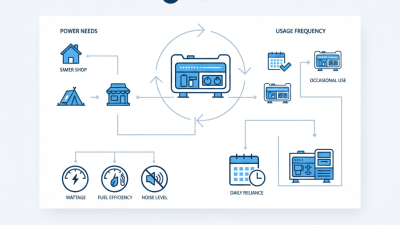
Choosing the right DG generator for your business requires careful consideration. You must evaluate several key factors to ensure that the generator meets your specific needs. Power output is crucial. Assess your power requirements based on the equipment you intend to run. Understanding your power needs helps avoid overspending or power shortages.
Fuel type is another important factor. Diesel generators are commonly favored for their efficiency and durability. However, they may not always be the best choice for every business due to fuel availability and environmental regulations. Evaluate your location and operational needs when deciding.
**Tips:** Look into maintenance requirements before making a purchase. A generator that’s difficult to maintain can lead to increased costs and downtime. Also, consider the generator's noise level, particularly if your operation is near residential areas. Noise reduction features can enhance your community relations and comply with local laws.
Lastly, don’t overlook warranty and service plans. These can significantly affect long-term costs and reliability. Seek out generators backed by a solid support system to ensure you are not left in a bind during critical times.
What is the Best DG Generator for Your Business Needs? - Key Factors to Consider When Choosing a DG Generator
| Model |
Power Output (kW) |
Fuel Type |
Noise Level (dBA) |
Runtime (hours) |
Weight (kg) |
| Model A |
10 |
Diesel |
65 |
8 |
120 |
| Model B |
15 |
Gasoline |
68 |
10 |
150 |
| Model C |
20 |
Propane |
70 |
12 |
200 |
| Model D |
25 |
Diesel |
60 |
15 |
250 |
Types of DG Generators: Which One Suits Your Business Needs?
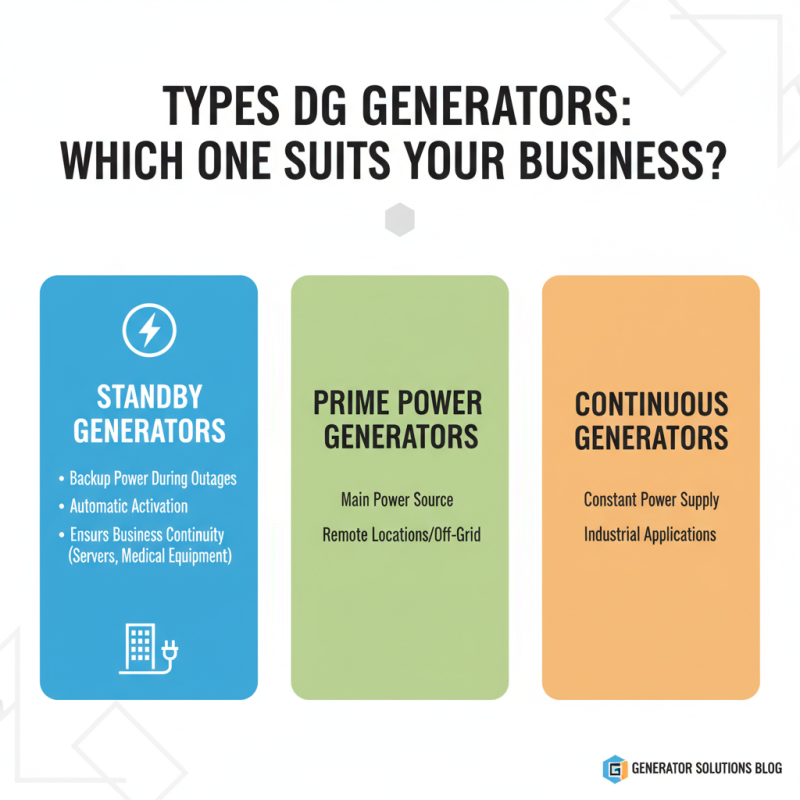
When selecting a diesel generator (DG generator) for your business, understanding the different types is essential. There are several categories, each fulfilling specific requirements. Standby generators provide backup power during outages. These units automatically activate when the main power fails. They ensure continuity for critical operations, like servers or medical equipment.
Alternatively, portable generators offer flexibility. They are ideal for businesses that need temporary power at various job sites. Their mobility is a significant advantage. However, they may have limited power output compared to standby models. It’s important to assess your energy needs carefully. Small businesses may prioritize a compact, less expensive option, while larger enterprises might require robust systems.
Solar hybrid generators represent a modern solution. Utilizing renewable energy helps reduce operational costs over time. However, initial investments can be higher. It’s crucial to analyze your long-term energy strategy. Many businesses overlook maintenance requirements for DG generators. Regular upkeep ensures reliability but can be a hassle. Understanding the distinct types of generators aids in making an informed decision that aligns with your business's unique power needs.
Evaluating DG Generator Brands and Models in the Market
When choosing a diesel generator (DG) for business, it's crucial to evaluate the brands and models available in today’s competitive market. Industry reports indicate that many businesses underestimate their power needs. For example, a report by the International Energy Agency shows that about 30% of businesses choose generators that do not meet their energy demands, risking operational downtime.
When assessing DG generators, consider their efficiency ratings and noise levels. According to a recent market survey, models with higher efficiency ratings can save companies up to 15% in fuel costs. Meanwhile, noise pollution can impact worker productivity. Many businesses overlook this aspect but fail to note that quieter generators enhance workplace comfort.
Furthermore, maintenance reliability is often a point of concern. Some brands claim longer service intervals, yet many users report issues with parts availability. A survey from the Generator Manufacturers Association highlighted that 25% of respondents experienced performance issues within the first year. Companies must reflect on these factors to ensure long-term reliability and performance when selecting a generator model.
Cost-Benefit Analysis of Investing in a Quality DG Generator
Investing in a quality diesel generator (DG generator) is more than just a purchase; it's a critical business decision. Understanding the cost-benefit analysis of such an investment is essential. A well-chosen DG generator can provide reliable power during outages, safeguarding your operations. Downtime can lead to significant losses. This makes reliability a key factor in your decision-making process.
When evaluating costs, consider initial purchase price, installation fees, and ongoing maintenance. It's easy to focus only on upfront costs, but long-term performance often outweighs initial savings. For example, cheaper models may result in higher fuel consumption or more frequent repairs. Calculating total ownership costs over time is vital.
Think about your specific power requirements and how a DG generator meets those needs. An oversized generator can lead to inefficiency. An undersized one may struggle to handle your load. Regular maintenance contributes to longevity but may incur ongoing costs. This means weighing the cost of quality against potential operational risks, which is a nuanced decision for any business owner.

 Sinotruk Parts
 Shacman Parts
 FAW Parts
 Dongfeng Parts
 Foton Parts
 CHENGLONG PARTS
 Golden Dragon Bus Parts
 King Long Parts
 Yutong Parts
 Higer Parts
 Zhongtong Parts
 Ankai Parts



 Mr. Perry Wu International Sales Director